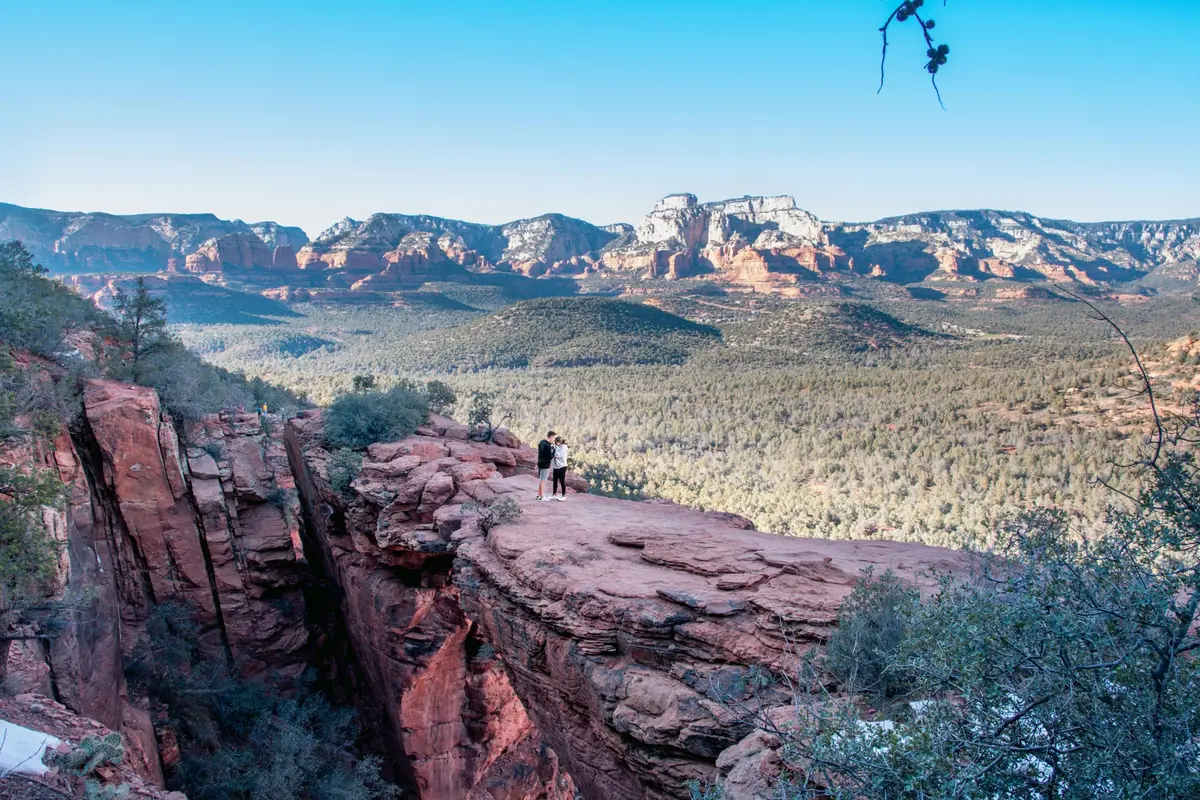
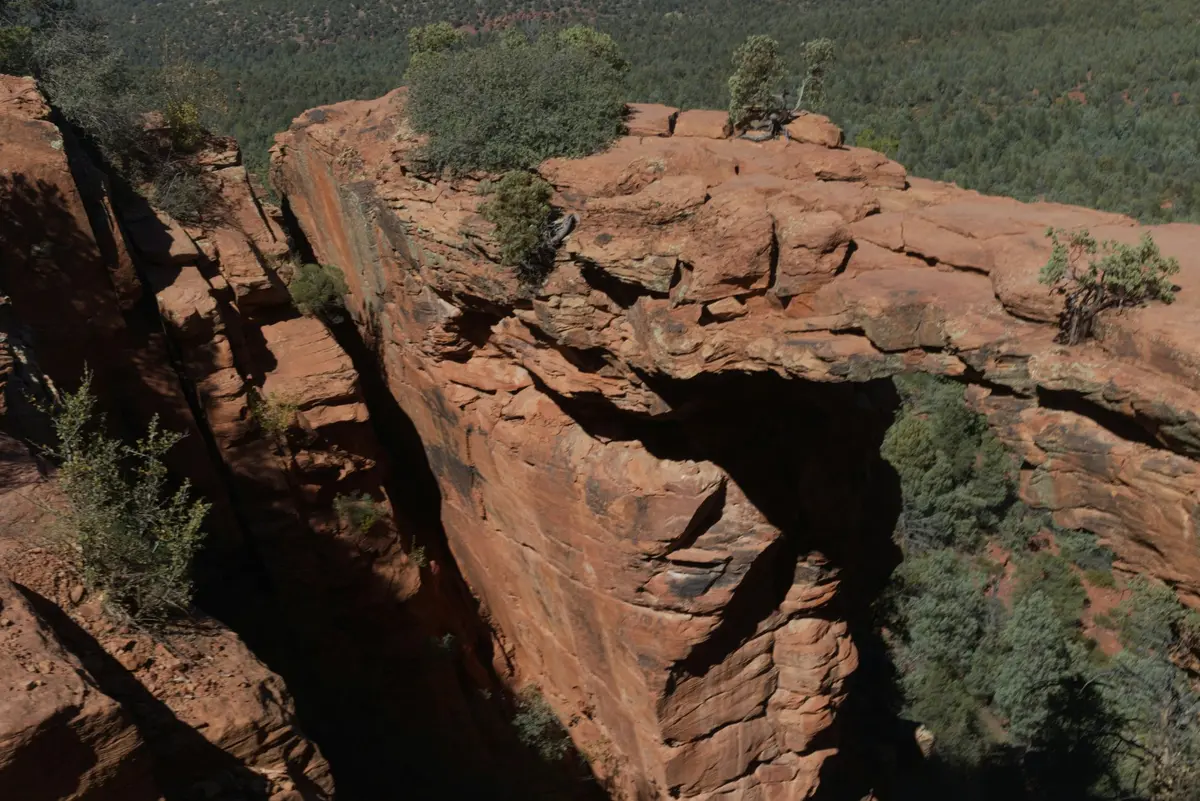
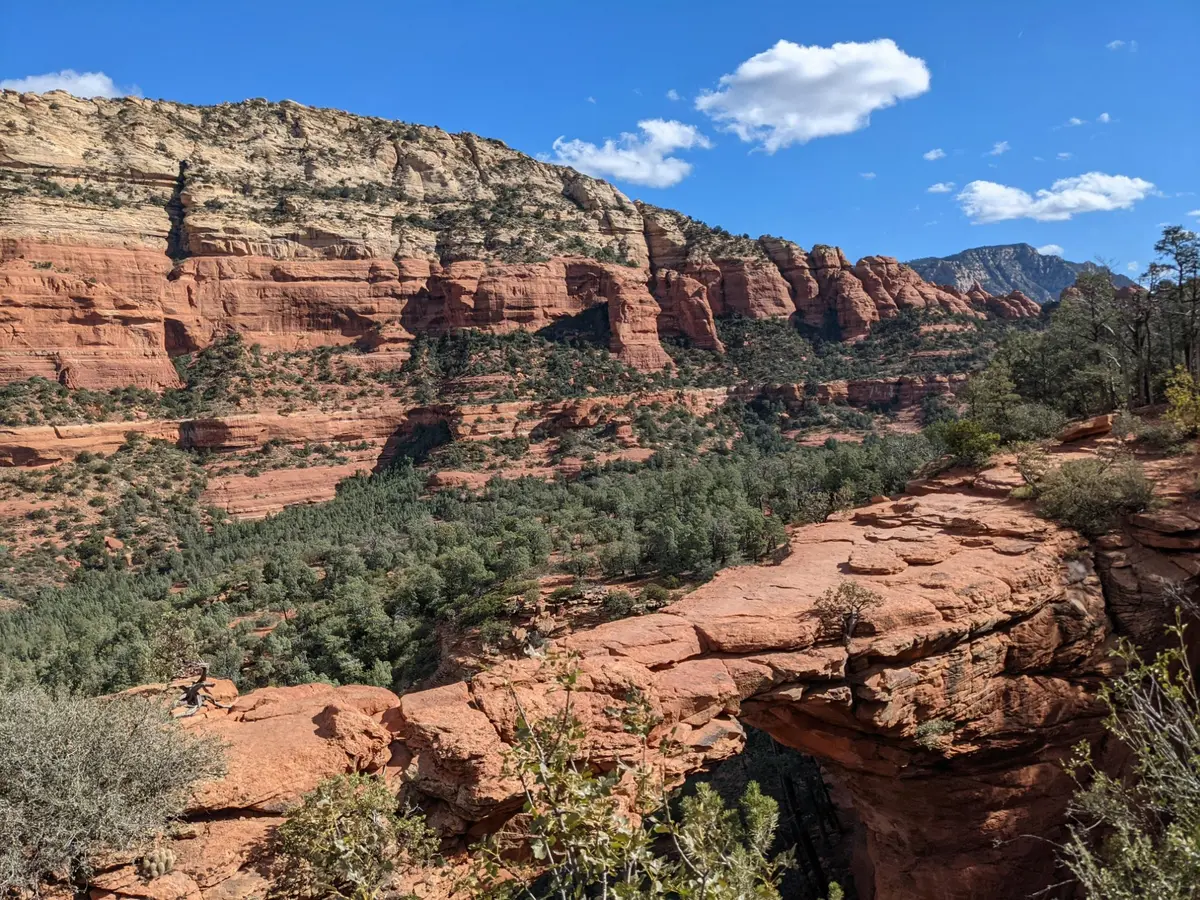
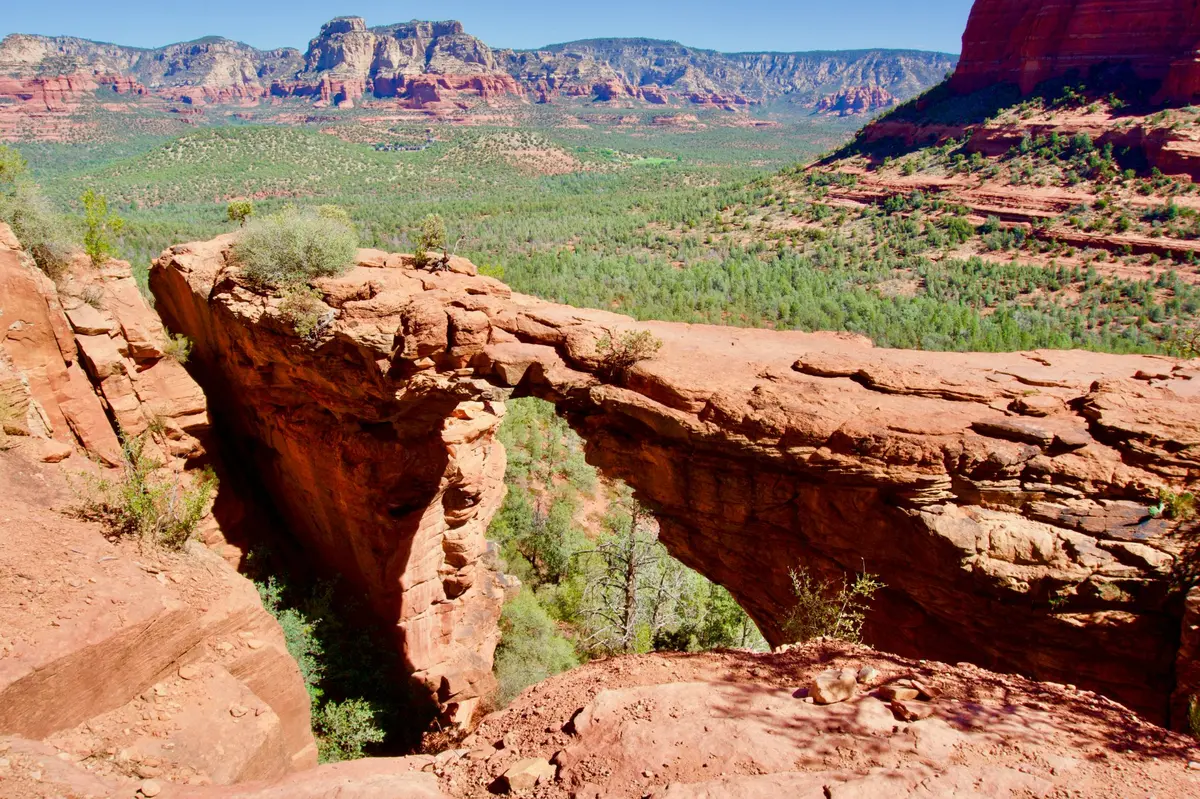
Sedona has no shortage of good hikes. Devil’s Bridge is not just a good hike. It is the one people come back to, the one they bring their visiting family to, the one that shows up in every photo essay about the Southwest. The largest natural sandstone arch in the Sedona area, it spans across open air with red rock canyons dropping away on both sides. On a clear morning with nobody else on it, it is one of the better things you can do in Arizona.
That said, you will not be alone. This is among the most visited trails in a very visited town. How you feel about that depends on when you show up.
The Quick Version
Devil’s Bridge from the Dry Creek Road trailhead is a 3.9-mile round trip with about 680 feet of gain. The first half is mostly flat on wide, compacted dirt and red rock. The second half has some rocky climbing with a short scramble to reach the arch itself. Budget two to three hours. Bring your Red Rock Pass and more water than you think you need.
What Kind of Trail Is This
The first mile out of the Dry Creek Road lot follows what used to be a dirt road. It is wide, well-graded, and about as easy as hiking gets. You share it with mountain bikes and occasionally with Pink Jeep tours rolling past. There is almost no shade on this stretch.
After the road section the trail narrows and the character changes. You are on single-track now, winding through juniper and cypress with the red rock walls rising around you. The views start opening up. Some hikers stop here and decide this is enough, which is a reasonable call.
Then comes the final approach. A series of steep rocky steps, then a narrow ledge, then the arch. The scramble is short but it demands attention. The sandstone is grippy when dry and considerably less so when wet. This section is where people occasionally turn back and where the bottleneck forms on busy days.
The arch itself is wide enough to walk across comfortably. The view from the middle, with the canyon falling away in both directions and the red rock formations stretching out toward Sedona, is exactly as good as every photo suggests.
The Crowds
This is the honest part. On a Saturday morning in February, you may wait an hour to have your photo taken on the arch. That is not an exaggeration. The ledge below fills with hikers queuing for their turn, phones out, waiting. If that sounds unpleasant, go very early or on a weekday.
A Tuesday at first light in November is a different experience entirely. The arch is quiet, the light on the red rock is warm and low, and you can stand out there as long as you want. That version of this hike is close to perfect.
The parking situation compounds the crowd problem. The Dry Creek Road lot holds a limited number of vehicles and fills fast on weekend mornings. Once it is full, people park along Boynton Pass Road, which adds real distance to the hike. If you are relying on arriving at 8am on a Saturday in peak season, have a backup plan.
Timing and Light
Morning light hits the arch from the east and makes the red sandstone glow in a way afternoon light does not. Sunrise hikers get the best photography and the lightest crowds.
The winter months, October through March, are the sweet spot. Temperatures are comfortable, the light is better angled, and while weekends are still busy the weekday windows are genuinely peaceful.
Summer works if you start before the sun has any height. By 9am in July the exposed sections of this trail are hot and getting hotter fast.
Wildlife and Flora
This trail surprised me on that front. The juniper and cypress forest in the middle section supports more bird activity than you expect from a desert hike. You will hear cactus wrens and curve-billed thrashers in the shrubs. In the cooler months watch for ravens working the thermals above the canyon walls. Mule deer show up in the early morning on the road section.
The vegetation is classic Sedona transition zone. Prickly pear, cliffrose, Apache plume. The flowering season in March and April adds color to the red rock that makes an already beautiful trail look even better.
Getting There
The Dry Creek Road trailhead is northwest of Sedona off Highway 89A. Turn onto Dry Creek Road, then left onto Forest Road 152. The lot is about 1.3 miles down FR 152. The road is unpaved but manageable in most standard vehicles in dry conditions. High clearance helps. Do not attempt it after rain.
You need a Red Rock Pass to park. Day pass is $5. If you have an America the Beautiful annual pass, it covers you.
The alternative is the Dry Creek Trailhead closer to Sedona, which adds distance but has better paved parking. The Sedona Shuttle also runs to this area and is worth considering if you are visiting on a busy weekend and do not want to deal with the parking situation.
What to Bring
Water is non-negotiable. The trail offers zero shade on the road section and the Sedona sun is stronger than it looks. A liter and a half per person minimum on a cool day, two liters in warm weather.
Good shoes matter on the final scramble. Trail runners or hiking shoes with real grip. The sandstone can be slick after rain and some of those steps require confidence in your footing.
Bring your pass. Rangers do check at this trailhead.
Is It Worth It
Yes, even with the crowds. The arch is one of those things that is genuinely as good as the pictures. Stand in the middle of it with the canyon below you and the red rock towers in every direction, and it is hard to argue with the scenery score this trail gets.
Just go early.