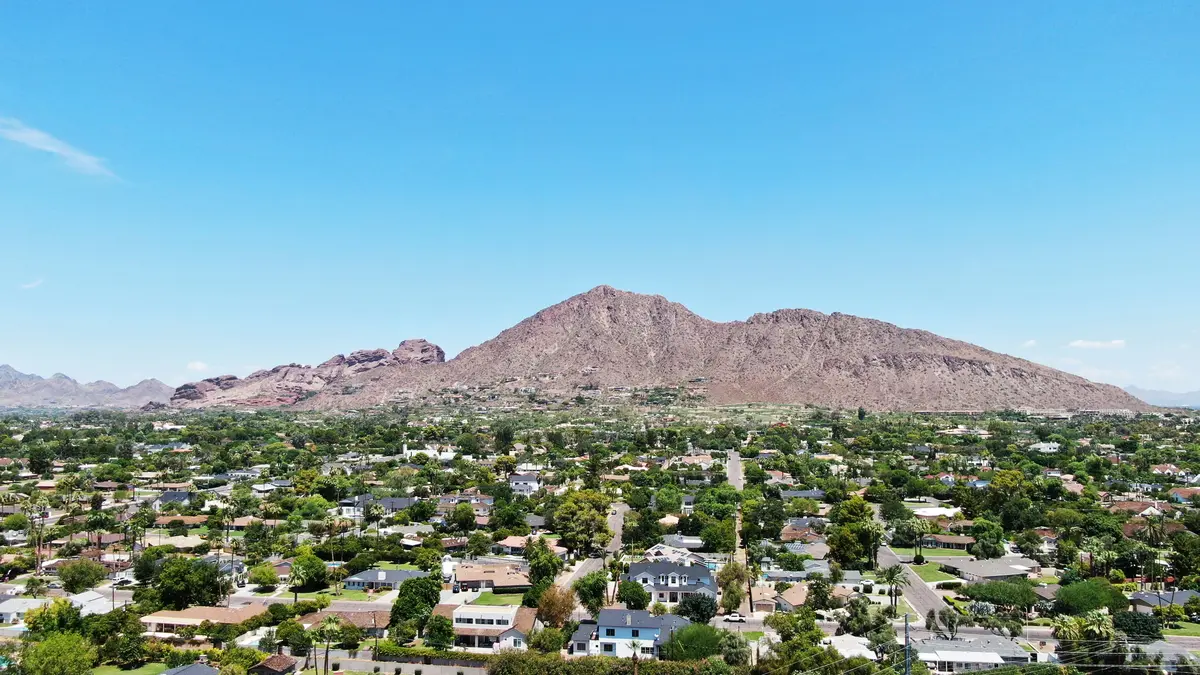
Most people who hike Camelback go to Echo Canyon. They know the name, they know the parking lot, they know the handrails. The Cholla Trail comes up the other side of the mountain, from the east, through a quieter neighborhood in Scottsdale. It is not easier. The climbing is spread out differently, and the last third asks more of you than anything on the west face.
Overview
Cholla Trail ascends the eastern slope of Camelback Mountain, approaching the summit from the opposite direction of the more famous Echo Canyon route. The lower two thirds follow a well-defined path with a manageable grade. The upper third is a boulder scramble that requires hands and feet and a genuine comfort with exposure. The summit is the same 2,704 feet either way, and so are the views. This trail is for experienced hikers who want a slightly longer approach and a less crowded starting point. It is not for beginners.
Two Trails in One
The Cholla Trail has a split personality, and the two halves ask completely different things of you.
The lower section is pleasant. The trail is well defined, the grade is steady rather than brutal, and the saguaro and cholla cactus lining the path give it a different character than the rocky west face. You gain elevation without feeling like you’re paying for every foot of it. The first mile and a half moves through this section and it goes quickly.
Then the saddle arrives. There’s a small rest area here and a clear view of what is ahead. The upper third of the trail changes completely. The defined path dissolves into boulders. The grade steepens sharply. The route is difficult to follow and requires reading the terrain rather than following a line. Hands go on rock. Drop-offs appear on both sides. Shorter hikers will find some of the moves genuinely awkward given the size of the boulders involved.
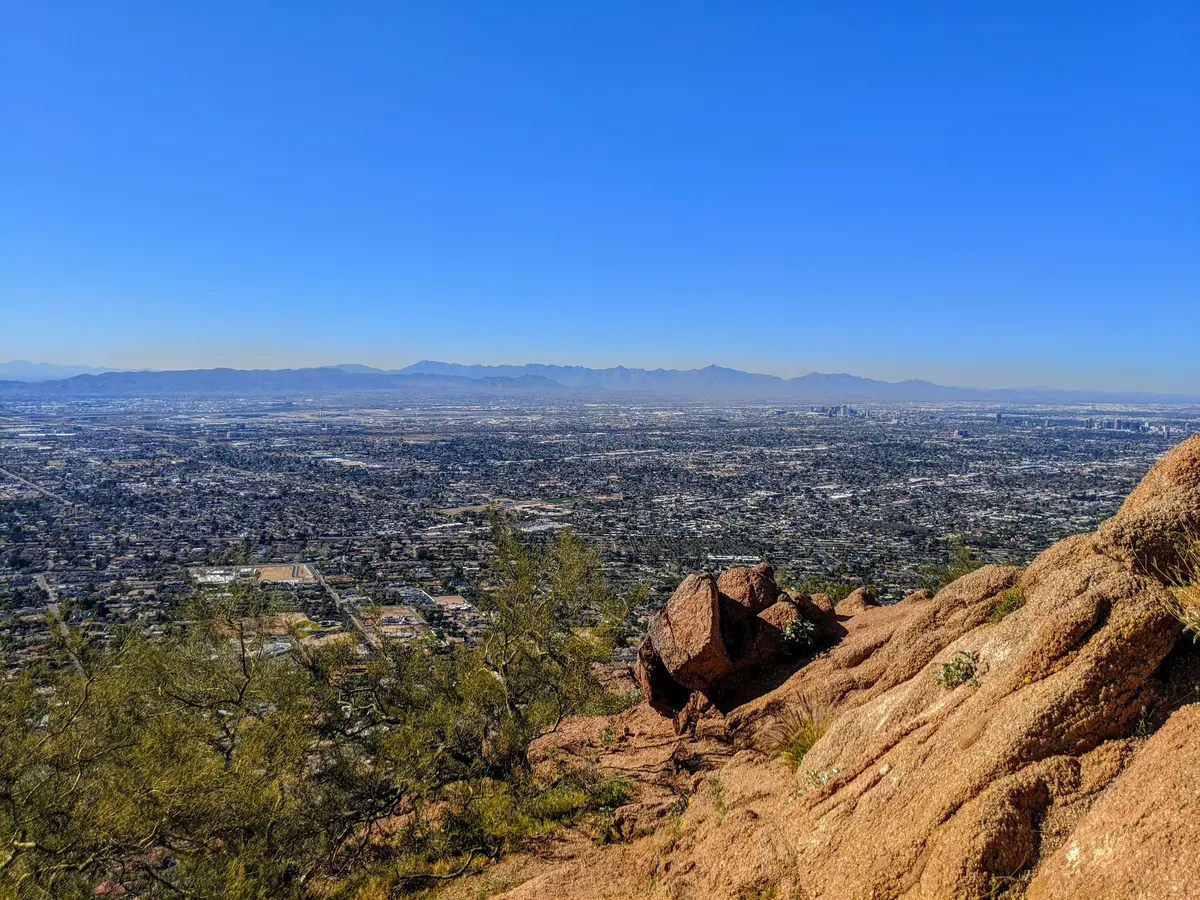
This section is where the trail earns its extremely difficult rating. It’s also where the views open up fully, looking back east over Scottsdale and north toward the McDowell Mountains. The summit, when you reach it, gives you the full Phoenix spread in every direction. It’s a good payoff. The work to get there is real.
The descent on the boulder section requires the same attention as the ascent and, for most people, takes longer. Loose gravel on the lower section can be slippery on the way down. Poles help if your knees need them.
Timing & Crowds
October through April. Same answer as every exposed Phoenix mountain hike. Earlier in that window is better. November and December mornings on the Cholla Trail are about as good as it gets in terms of temperature and light.
The Cholla trailhead is less chaotic than Echo Canyon but don’t mistake that for low traffic. Camelback Mountain is one of the most hiked urban peaks in the country and both trails show it. The street parking situation on Invergordon Road means the crowd feels less concentrated than the Echo Canyon lot, but the trail itself gets busy on weekend mornings. Weekday visits are noticeably quieter.
Start at or before sunrise. Parking gets difficult by 8am on weekends. More importantly, the trail is completely exposed and the rock surface begins radiating heat within an hour of direct sun. An early start isn’t optional in any season except deep winter.
Getting There
The Cholla Trailhead is accessed from Invergordon Road in Scottsdale, east of the mountain. There’s no parking lot. Parking is parallel street parking on the west side of Invergordon Road in clearly marked sections only. The restrictions are strictly enforced and towing is real. Rideshare drop-off zones are marked with yellow curbs along Cholla Lane, which leads to the trailhead via a gravel path.
There’s no water at the trailhead. No fees, no permits. No dogs.
What to Bring & Safety
Two liters of water is the stated minimum and it’s a floor rather than a comfortable amount. Three liters is more appropriate for a full round trip in cool weather. More in anything warmer.
Shoes with real grip aren’t negotiable on the upper boulder section. The rock is smooth in places and the consequences of a slip are significant. Trail runners with good traction work. Approach shoes or hiking boots with a stiff sole are better.
Rattlesnakes are regularly encountered on this trail. Watch where you put your hands on the boulder section, particularly in cracks and under ledges. The trail also passes through dense cholla cactus on the lower sections. Cholla spines detach easily and are difficult to remove. Stay on the path.
Bees have been reported as a hazard on this trail. If you encounter a swarm, move quickly and don’t stop. This isn’t a common occurrence but it happens.
The saddle rest area is the right turnaround point if you have any doubt about the scrambling above. The views from there are real. There’s no requirement to push into terrain you aren’t prepared for.